 Ivy Psychology
What to expect when you start work with one of our clinicians.
Most people who come to a psychology practice for the first time are at least a bit anxious about it. That's normal. This page is for you to read before your first session so you know what to expect.
Before your first visit
You'll have already had contact with our admin team. They'll have confirmed your booking, sent you any intake paperwork, and let you know what to bring. If you have a Mental Health Treatment Plan from your GP, bring it. If you have prior reports or assessments, send them ahead or bring them with you.
You'll know which clinician you're seeing, and a little about them. Their name, photo, and approach are on our team page. If you've ended up seeing a clinician we suggested rather than one you chose, ask us why; there's usually a reason (fit, availability, expertise) and we'll explain.
You'll have a sense of the fee. Our fees are published on the relevant service page and on our fees page.
When you arrive
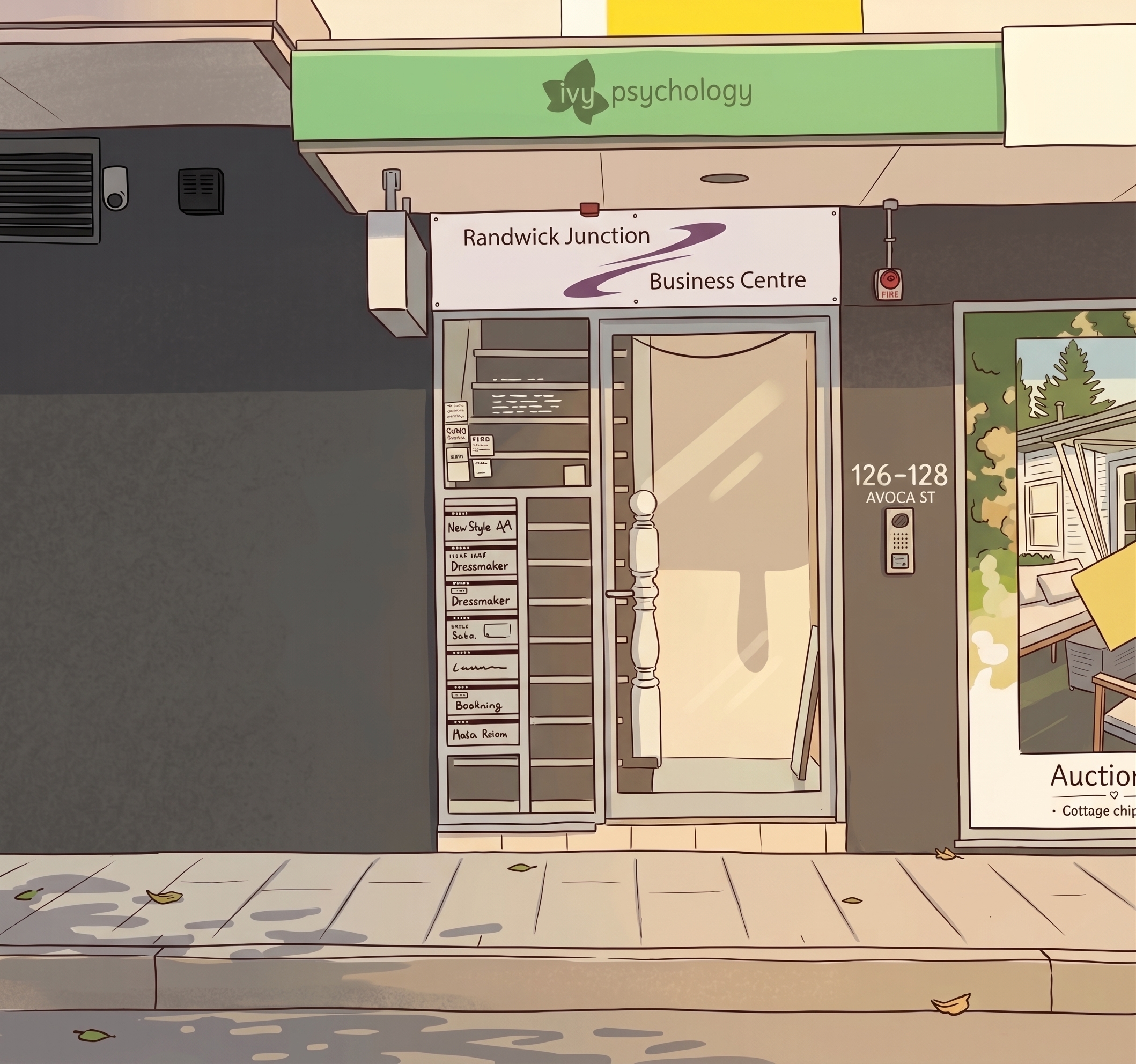

At our Randwick clinic: the receptionist will let your clinician know you've arrived, and we have a small waiting area. Feel free to arrive at the time your appointment starts - there's no need to come early.
Driving in? Our parking guide maps the free street parking nearby and the Royal Randwick car park, including where to turn in.
Via telehealth: your clinician will email you a video link before the session. You don't need to download anything special. Use a private, quiet space if you can; if you can't, tell your clinician.
In your home (NDIS participants only): they'll arrive at the agreed time. Let us know if there's anything they need to know about parking, building access, or who else might be home.
Our rooms and waiting areas
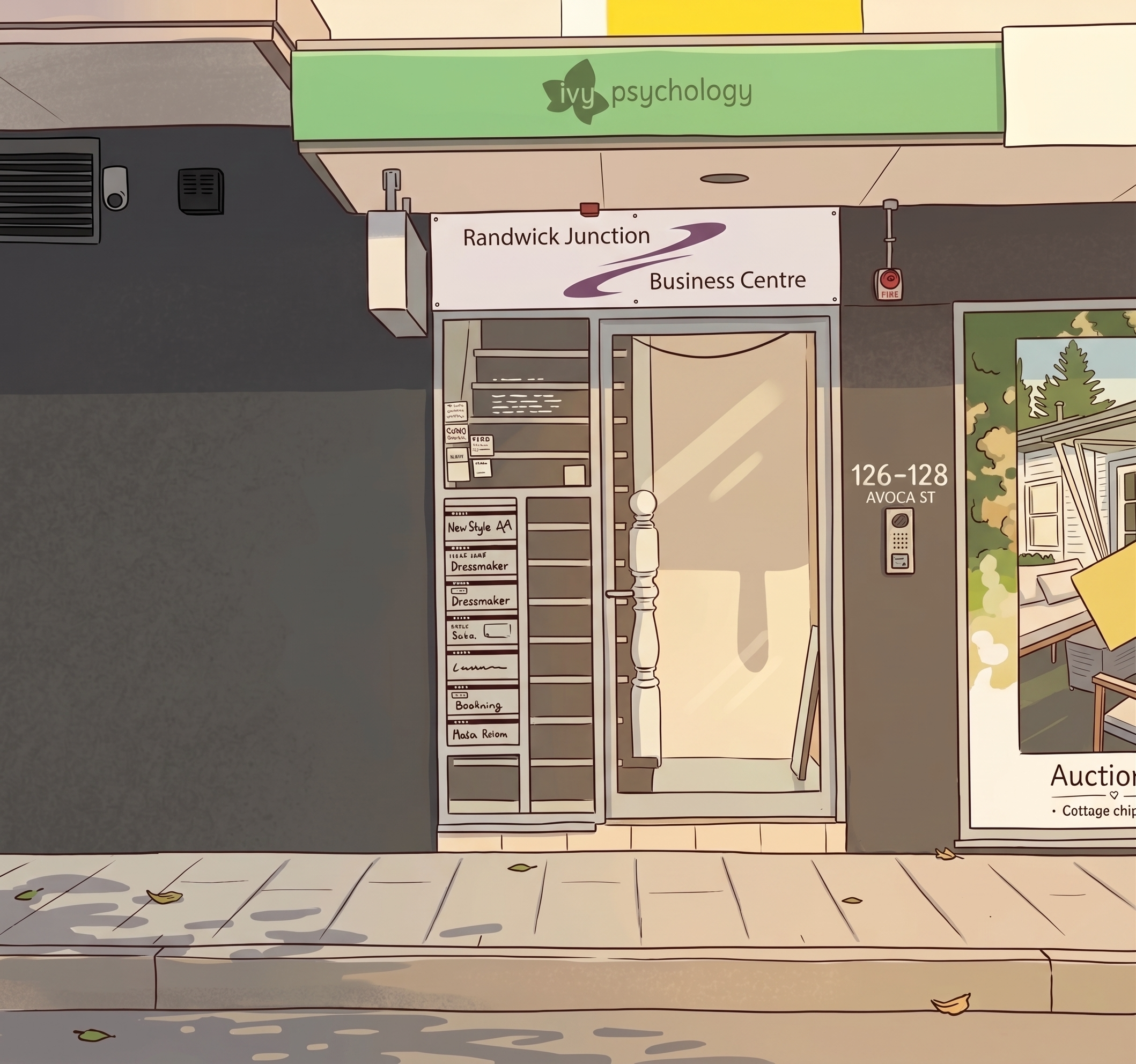
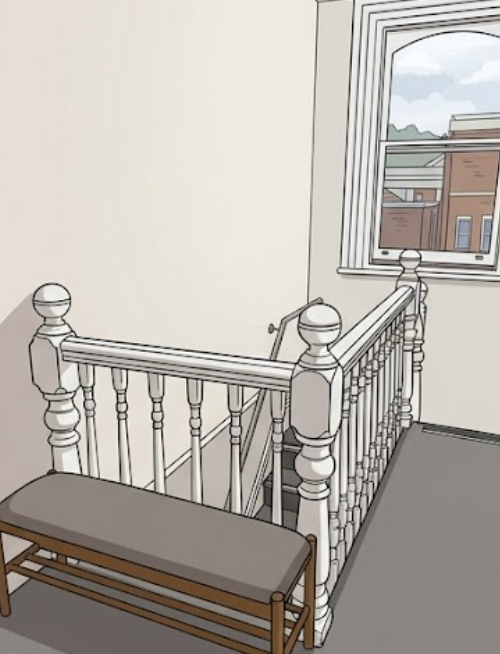
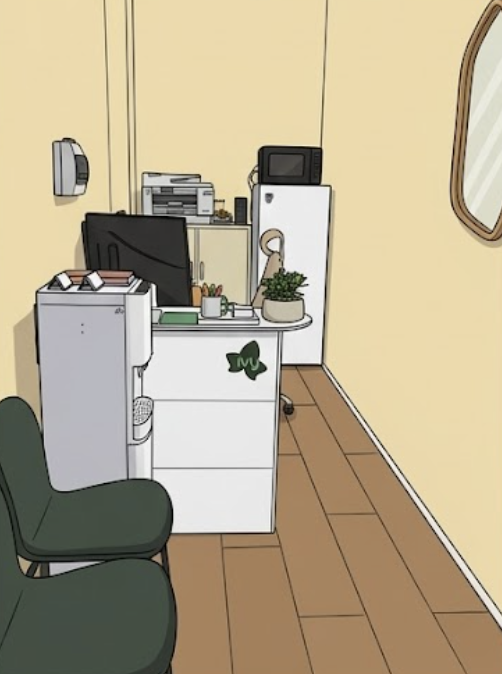
A quick visual tour. Our spaces are deliberately low-key and flexible - sit on the lounge, the floor, an office chair, or wherever you're comfortable.


The first session
The first session is mostly about your clinician understanding what's brought you in. They'll ask about what you're experiencing now, what's been happening recently, a bit about your history, and what you're hoping to get out of working together.
There usually isn't much in the way of techniques, homework, or strategies in the first session. That comes later, once your clinician has a sense of what's going on.
By the end of the first session, you should have:
- A sense of whether this clinician is the right fit
- An initial impression of what working together might involve
- An idea of how often you'd be meeting, and for how long the work might run
You don't have to commit to ongoing sessions at the end of the first one. Take a few days if you need to.
What if it's not the right fit
It happens. Sometimes the connection isn't there. Sometimes the clinician realises a different approach or a different clinician would suit you better. Tell us. We don't take it personally and we'd rather you found the right fit than continue in the wrong one.
First-visit questions

Common questions
What happens in a first session?
Mostly listening, on the clinician's part. They'll want to understand what's brought you in, what you've tried, what you're hoping for, and a bit about your life and history.
How long is a session?
Standard therapy sessions are 50 minutes. Assessment sessions vary by type; cognitive assessments often run 2 to 3 hours, with breaks.
Are sessions confidential?
Yes, with the standard legal limits that apply to all psychological practice in Australia: if there is risk of serious harm to you or someone else, if a child is at risk, or if records are subpoenaed by a court. Your clinician will explain this in detail in your first session.
What if I need to cancel?
We require 48 hours notice for cancellations. Cancellations with less notice are charged at the full session fee.